IRON FLAME
James Pierce
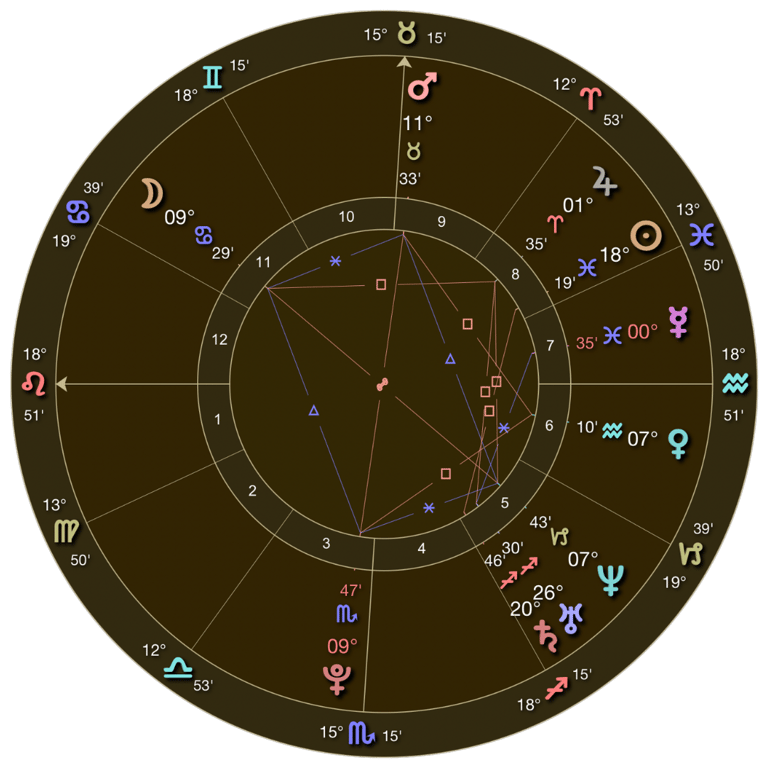
Born on March 2, 1987, at 3:02 PM in Mountain View, California
YOUR MYTH
Core Essence

The Iron Flame is power held in form.
A fire shaped, not spent.
A vow carried, not spoken.
He does not erupt — he endures.
He does not flee the ache — he learns its language.
Forged in pressure,
tempered by discipline,
softened by sorrow,
he carries all three.
Where others fracture, he focuses.
Where others reach for light,
he becomes the vessel that holds it.
His strength is not in what he shows,
but in what he contains.
The Iron Flame was not given —
it was earned.
In silence.
In shadow.
In structure.
He does not burn to be seen.
He burns to become.
The Symbol

The Forged Blade
Rising through the center, the upright sword represents unshakable will—cutting through illusion with disciplined clarity. It is the axis of inner truth, forged in fire, unbending yet refined.

The Droplet Core
Suspended in balance, the dark water droplet cools the flame—an emblem of grief, mystery, and emotional depth. It softens the iron, offering soul to strength, ache to ambition.

The Ring of Containment
Encircling the flame, the iron circle holds tension and devotion in sacred bounds. It speaks to the strength that comes from structure—how power, when contained, becomes purpose.

The Cracked Pedestal
The base from which the flame emerges bears a fracture—marking the pressure that shaped it. A sign that what holds us need not be whole to be holy.

The Rising Flame
Erupting from the blade’s edge, this fire is not destructive—it is devotional. A symbol of transmutation, it reveals the heat that transforms pain into power, and impulse into integrity.

The Encircling Waters
Lapping at the stone’s base, the still water reflects the realm of feeling beneath form. It reminds us that even fire needs rest, and that power, to last, must touch the deep.
Mythic Mantra
I was not born to blaze for applause—
I was born to burn with meaning.To forge what is fractured,to carry the heat of what I’ve survived,to become the blade and the balm.I hold the fire without flinching.I carry the weight without collapse.I temper strength with sorrow,and ambition with depth.My discipline is not denial—it is devotion.Where I rise, something ancient is remembered.Where I endure, something holy is restored.I do not seek the crown.I seek the core.And from the center,I burn with Iron Grace.I create with Iron Flame.I live as a vessel of what must endure.
ASPECTS EXPLORED

OBSIDIAN WILL
MARS opposite PLUTO
♂ ☍ ♇
A Mars–Pluto opposition births the Obsidian Will—a furnace forged in silence, where raw power meets relentless intent. This is the alignment of someone who does not just act, but transforms through pressure. Mars gives the fire, Pluto gives the depth—and together, they shape a being who tunnels through impossibility with volcanic resolve.
The Obsidian Will does not waver. He moves through life like magma beneath the surface—slow, certain, unstoppable. This archetype lives through trials, forging purpose from pain, and transmuting struggle into strength. In his path, destruction becomes creation. His challenge is not force, but focus—learning to channel intensity into evolution, until every obstacle becomes a catalyst for becoming.
- Person: Ralph Lauren
- Activity: Night Running
- Film: There Will Be Blood
- Aesthetic: Apex Predator

SACRED ACHE
MOON opposite NEPTUNE
☽ ☍ ♆
A Moon–Neptune opposition opens the Sacred Ache—a soft aperture in the soul, where emotion flows like tide and suffering becomes sacred. This is the alignment of someone who feels not just their own longing, but the world’s—whose heart is an ocean, stirred by invisible winds. The Moon brings memory and tenderness; Neptune brings dissolution, dreams, and wholeness.
The Sacred Ache is not weakness—it is a form of grace. This archetype lives through feeling, not fleeing: holding sorrow without turning numb, absorbing beauty without clinging. In his ache, there is divinity. He walks the line between empathy and erosion, always listening, always weeping quietly for the world. His challenge is to remain intact while porous—to allow emotion to guide him without losing the shore, until his ache becomes a channel for the soul of the world.
- Person: Audrey Hepburn
- Activity: Sensory Deprivation Floating
- Film: The Green Mile
- Aesthetic: Wounded Healer

GRAVITY VESSEL
SUN square SATURN
☉□ ♄
A Sun–Saturn square shapes the Gravity Vessel—where radiance is contained, and the self becomes a sacred structure. This alignment belongs to one who carries weight with quiet dignity, who does not scatter his energy, but channels it inward, choosing the discipline that keeps him aligned. The Sun seeks to shine; Saturn insists it shine with purpose.
The Gravity Vessel is not loud. His strength is forged in repetition, in small refusals, in the unseen rigor of becoming. This archetype lives through a selfhood that is sculpted, not inherited—held together not by ego, but by vow. His silence has gravity. He is a container of light forged in shadow. His challenge is to endure without hardening, to hold without collapsing—until his restraint becomes a source of magnetic power.
- Person: Carl Sagan
- Activity: Bonsai Pruning
- Film: A Hidden Life
- Aesthetic: Quiet Centurion
OBSIDIAN WILL
MARS opposite PLUTO
♂ ☍ ♇
Ralph Lauren (October 14, 1939) wasn’t born into the world he eventually came to define.
He grew up in the Bronx, the son of Jewish immigrants, working-class and far from the polished dream he would later create. He changed his name from Lifshitz. He sold ties out of a drawer. His beginnings weren’t glamorous—but they were driven. What set him apart wasn’t just ambition—it was vision. He saw something that didn’t yet exist, and he built it piece by piece.
Lauren didn’t just design clothes—he designed a world. He gave Americans permission to imagine lives of dignity, heritage, and refinement, even if they hadn’t inherited those things. Lacquered wood. Horse farms. Oxford shirts. It was more than fashion—it was a map to identity.
At the center of his chart is a Mars–Pluto opposition—what we call Obsidian Will. Mars wants to act. Pluto wants to transform. In opposition, they create pressure, hunger, and the need to prove something deep and invisible. For Lauren, that drive didn’t explode outward—it was contained, channeled, disciplined. His rise wasn’t about rebellion—it was about reinvention.
He didn’t conquer through confrontation. He built slowly, with taste and control.
And in doing so, he turned style into narrative.
Image into legacy.
Desire into identity.
His story reminds us:
That hunger doesn’t have to be loud.
That refinement can be its own form of power.
And that when you shape your own myth, you don’t have to ask permission to belong.
Night Running reflects the raw discipline of the Mars–Pluto opposition, where desire must descend before it ascends. This is not cardio—it’s confrontation. The street becomes a corridor of shadow and steel. The body, a vessel for buried fire. With no music, no pace to perform, only the breath and pounding heart remain.
Mars initiates the motion—but Pluto deepens it. Each stride is an exorcism of what’s been repressed. You run not to flee, but to face. Rage metabolizes into rhythm. Power returns to its source. There is no audience, no approval—just your will burning against the cool night air.
Where daytime running displays energy, night running contains it. You become lean with intention. Sharp with silence. Running becomes ritual: a slow ignition of autonomy, a private rite of rebirth.
It is not about speed.
It is about sovereignty.
Run not to escape—but to become unshakable.Let your breath be the furnace. Let the road remember your name.
In There Will Be Blood (2007), the Mars–Pluto opposition erupts through the brutal, magnetic force of Daniel Plainview—where ambition (Mars) and underworld power (Pluto) collide in a single, relentless drive. He drills into the earth not for oil, but for meaning—each strike a blow against vulnerability, each well a descent into himself. What begins as survival becomes obsession. What begins as hunger becomes domination.
Plainview’s rise is not a triumph. It’s a slow-burning collapse—of empathy, of connection, of soul. He builds an empire, but unearths an abyss. Every act of power isolates him further, until all that remains is control without intimacy, wealth without warmth, fire without form. His Mars doesn’t explode—it corrodes. His Pluto doesn’t transform—it consumes.
This is not a redemption arc. It is a reckoning. The film does not ask for our sympathy—it demands we witness the cost of uncontained will. The Obsidian Will is here forged not in transcendence, but in pressure: a man shaped by the void he cannot fill, wielding force that cannot heal.
There Will Be Blood offers us the shadowed truth of this alignment: that power, when divorced from soul, becomes ruin. That the will to win, when never questioned, becomes the will to destroy. And that without something sacred to anchor it, even the strongest fire burns everything it touches—including the one who lit it.
SACRED ACHE
MOON opposite NEPTUNE
☽ ☍ ♆
Audrey Hepburn (May 4, 1929) grew up in war and carried its shadows with quiet strength for the rest of her life.
During World War II, she lived through Nazi occupation in the Netherlands. She nearly starved. She witnessed cruelty up close. At one point, she was so malnourished she couldn’t walk. Yet even in hiding, she danced—secret performances to raise money for the resistance. These early years shaped everything. Her grace wasn't cultivated in Hollywood—it was forged in survival.
What made Hepburn remarkable wasn’t just her beauty or charm. It was the softness she preserved despite the suffering she endured. She didn’t become bitter or hardened. She became a symbol of compassion, dedicating the later part of her life to humanitarian work with UNICEF—helping children because she remembered being one in crisis.
Her chart carries a Moon–Neptune opposition, what we call the Sacred Ache—a tension between deep emotional memory (Moon) and a longing for something beyond the personal (Neptune). People with this alignment often feel the suffering of the world as if it’s their own. For Hepburn, that ache didn’t close her off. It opened her.
Her acting wasn’t about performance—it was about presence. She made space for vulnerability. She brought dignity to femininity. She showed that elegance can come with edges, and that heartbreak can live quietly beneath kindness.
Her life reminds us:
That you can be soft and still survive.
That beauty can be shaped by sorrow.
And that even when you carry pain, you can still choose to serve, to care, and to shine.
To float in stillness is to return to origin.
In the warm, dark cradle of the tank, sensation withdraws. Gravity lifts. Sound vanishes. Sight dissolves. The body is suspended—but it is the soul that begins to move. This is not escapism. This is encounter. A conversation with the self beneath the self.
Under the spell of Moon–Neptune, the external world is peeled away, and what remains is feeling—raw, luminous, unguarded. In this space, nothingness becomes mirror. The ache you buried rises gently, not to torment, but to be witnessed. And the ache is not just yours—it belongs to the whole. You are alone, but not separate. You are quiet, but not empty. You feel your own pulse like waves in the ocean of everything.
Floating becomes a ritual of surrender. You do not steer—you soften. You do not resist—you receive. The boundary between skin and water disappears. What held you apart now holds you whole.
This is the sacred ache:
Not the pain of isolation, but the ache of unity forgotten.
Not the scream for answers, but the weeping of wonder.
Here, the tears don’t fall.
They rise.
They suspend with you.
Float not to flee, but to feel.Let silence show you what is still alive.Let darkness become the room where your softness returns.Let the water speak the name you forgot you carried.
In The Green Mile (1999), the Sacred Ache of Moon–Neptune emerges not as spectacle, but as soft power—a spiritual force carried in the body of a gentle giant, and felt in the silence between executions. John Coffey, a death row inmate with miraculous healing gifts, is not a symbol of redemption—he is redemption. A man whose suffering reveals the blindness of a world that confuses cruelty with justice.
His presence bends the atmosphere. The ache is not only his—but everyone’s. This is Moon–Neptune as embodied grace, as unbearable empathy. Coffey doesn’t fight. He feels. He takes on the wounds of others, not to prove his strength, but because he can’t not. His power is porous. Tender. Radiant with sorrow.
The prison becomes a temple of reckoning. The guards, especially Paul Edgecomb, are drawn into something larger than law—a moral dreamscape where the soul speaks louder than the sentence. Neptune washes away certainty. Moon reveals what the mind cannot hold: that love, even here, still flows.
The Green Mile isn’t a film about miracles. It’s a film about how the most miraculous thing is compassion that survives contact with suffering. Coffey doesn’t escape his fate—but his presence transforms it. He dies, and something holy remains.
This is the Sacred Ache in its highest form:
A grief that opens the heart.
A softness that shatters power.
A love that asks nothing—and gives everything.
GRAVITY VESSEL
SATURN square SUN
☉□ ♄
Carl Sagan (November 9, 1934) did not grow up with a telescope—he grew up with a hunger.
Born to a garment worker and a homemaker in Depression-era Brooklyn, he found the stars not through privilege but through possibility. His mother gave him confidence. His father gave him compassion. The cosmos gave him a calling.
But even wonder must be earned.
His Sun–Saturn square is what we call the Gravity Vessel—a tension forged between light and weight, selfhood and structure. The Sun longs to radiate freely, but Saturn slows, sharpens, humbles. Sagan’s brilliance didn’t erupt—it was refined, revised, responsible.
From an early age, he lived between awe and accountability. He saw that truth was not enough—you had to translate it. So he labored: through hundreds of lectures, grueling rewrites, and the painstaking work of writing for those who had never looked through a telescope.
He made the cosmos comprehensible. Not by diluting it—but by devoting himself to the task of integrity.
He suffered too. Ridiculed at times by scientific peers for popularizing science. Pressured by a culture that worshipped flash. Grieving a world that wouldn’t wake up fast enough.
But he never stopped working. Or hoping.
The Gravity Vessel does not shout. It speaks with earned weight.
Sagan’s voice was a quiet cathedral: full of patience, structure, and reverence.
He once said, “We are a way for the cosmos to know itself.”
And in that knowing, he gave meaning to the ache of existence.
His life is a testament to those who carry light not to perform it—but to preserve it.
Who labor not for applause—but for alignment.
And who prove, through discipline and devotion, that the real revolution is responsibility.
Bonsai pruning reflects the sacred tension of the Sun–Saturn square—where the radiance of selfhood is refined by the quiet rigor of form. The tree is not conquered. It is companioned. You do not impose shape—you earn the right to guide it. With every gesture, you enter a dialogue between impulse and integrity, freedom and frame.
You watch more than you cut. You wait longer than you move. It is not about dominance—it is about devotion.
About asking: What wants to grow here?
About answering: What must be trimmed so it can?
Saturn is the blade—precise, withholding.
The Sun is the vision—faithful, ever-burning.
The Sun is the vision—faithful, ever-burning.
Together they create a beauty not born from bloom, but from boundary. The bonsai becomes a mirror—not of what you want to express, but of what you are willing to endure for that expression to be true.
Each cut is a quiet vow:
To return.
To tend.
To resist the rush toward showiness in favor of slow sovereignty.
Bonsai is not about making something small.
It’s about honoring the largeness that comes from care.
Prune not to control, but to commune.Let the branches become your reflection—measured, meaningful, and alive with restraint.
In A Hidden Life (2019), the Gravity Vessel comes to life through Franz Jägerstätter—a quiet farmer who refuses to swear allegiance to Hitler. His decision is not explosive, not performative. It is interior, intimate, almost invisible. And yet it costs him everything.
The Sun–Saturn square doesn’t shout. It endures. It binds light to law—not the laws of empire, but the laws of soul. Franz is not driven by rebellion; he is anchored by integrity. In a world screaming for obedience, he listens inward. He chooses the narrow path, not because it is heroic, but because it is his.
The weight of this choice is not light. It isolates him from his village, burdens his wife, steals his future. And yet, he carries it—not with bitterness, but with grace. Saturn tests the core. The Sun must burn clean. In Franz’s stillness, we see the cost of real alignment.
Malick’s camera lingers on wheat fields, on skin, on light through trees. It reminds us: the most sacred vows are not made in cathedrals—they are made in kitchens, on dirt roads, in quiet refusals. A Hidden Life reveals the architecture of conscience. It is the story of a man who does not win—but remains whole.
He does not resist for glory.He does not refuse for applause.He simply cannot lie with his life.And in that silence, a new world is born.
AESTHETICS
Color Palette

Moon River
A pale, glacial white kissed by soft lunar glow. It evokes stillness without sterility—a calm, watchful presence that mirrors the soul’s longing to flow without losing form.
A pale, glacial white kissed by soft lunar glow. It evokes stillness without sterility—a calm, watchful presence that mirrors the soul’s longing to flow without losing form.

Burnt Alloy
A black so dense it feels like silence incarnate. This is the void that holds, not erases—the depth in which vision sharpens, where power retreats to renew.
A black so dense it feels like silence incarnate. This is the void that holds, not erases—the depth in which vision sharpens, where power retreats to renew.

Eclipse Night
A black so dense it feels like silence incarnate. This is the void that holds, not erases—the depth in which vision sharpens, where power retreats to renew.
A black so dense it feels like silence incarnate. This is the void that holds, not erases—the depth in which vision sharpens, where power retreats to renew.

Blood Root
A bruised, earthy crimson that pulses with hidden life. It is the color of sacred wounds and ancestral heat—where love runs deep, and devotion takes root in the body.
A bruised, earthy crimson that pulses with hidden life. It is the color of sacred wounds and ancestral heat—where love runs deep, and devotion takes root in the body.

Steel Mist
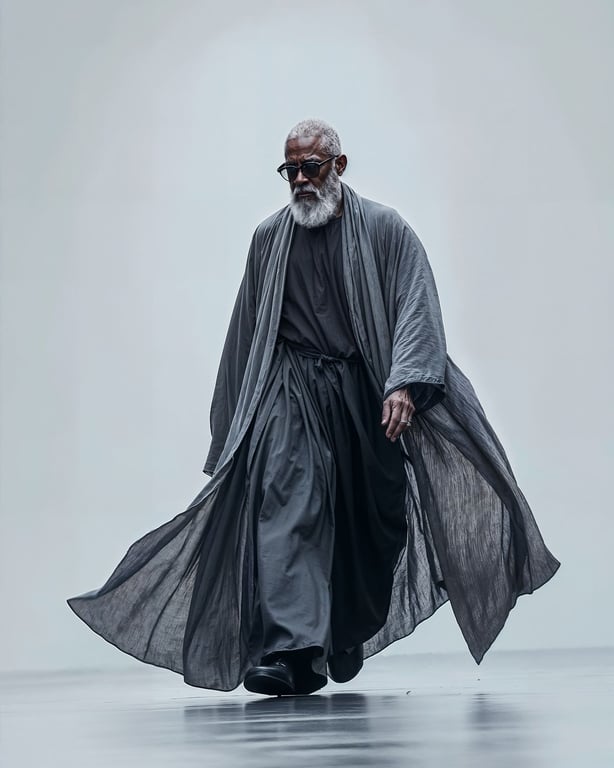
A soft, smoky grey with the chill of clarity. It speaks of restraint without suppression—a breath between effort and ease, where discipline meets grace in the in-between.
A soft, smoky grey with the chill of clarity. It speaks of restraint without suppression—a breath between effort and ease, where discipline meets grace in the in-between.
Style Guide
Integrated Vision
HISTORY
1987
The world when you were born.

♄ ☌ ♅ Saturn conjunct Uranus
A supportive aspect that bridges tradition and innovation. Saturn, the architect of order and enduring structure, aligns with Uranus, the awakener and disruptor of norms. This alignment reflects a time when change is not rebellious but constructive—when the new honors the old by transforming it from within. Breakthroughs are made with blueprints, revolutions guided by responsibility. It’s the rebel in a tailored suit, the inventor who respects history, the patient reformer.
Yet the tension of this harmony can manifest as quiet repression—a fear of moving too fast, or of destabilizing hard-won stability. It may reflect stalled progress, an over-rationalization of freedom, or creativity that calcifies into systems before it fully breathes. Still, when harnessed, it carries the power to reshape reality through thoughtful disruption and enduring reform.

♃ □ ♅ Jupiter square Uranus
A tense alignment that electrifies the drive for expansion. Jupiter, the planet of growth, vision, and belief, collides with Uranus, the radical force of disruption and awakening. This aspect reflects a restless hunger for freedom—intellectual, spiritual, and cultural. It surges with rebellious optimism, grand schemes, and sudden leaps of insight. Innovation feels urgent. Rules feel irrelevant. Life wants to be lived on a larger scale, and on your own terms.
But the square stirs friction. It can manifest as overconfidence, erratic risk-taking, or a relentless need to escape the ordinary. Ideals may outpace reality. Revolutions may burn out before they build. There’s a danger of mistaking impulsiveness for truth, or novelty for wisdom. And yet, when channeled with awareness, this alignment fuels breakthroughs of vision—expanding what’s possible and jolting stagnant systems into unexpected evolution.

♃ □ ♆ Jupiter square Neptune
A tense dialogue between belief and illusion. Jupiter seeks meaning and expansion; Neptune dissolves boundaries in dreams and ideals. Together in square, they swell with spiritual longing—but risk confusion, overreach, or blind faith. This alignment can inspire grand visions unmoored from reality, or cloak escapism in the language of hope.
It’s the spell of the utopian promise, the lure of the mirage. Morality may become abstract, truth slippery. But beneath the fog lies a deeper invitation: to refine faith through disillusionment, and to anchor vision in discernment. When illusions fall, a more mature compassion can rise—one that dreams, yes, but also endures.